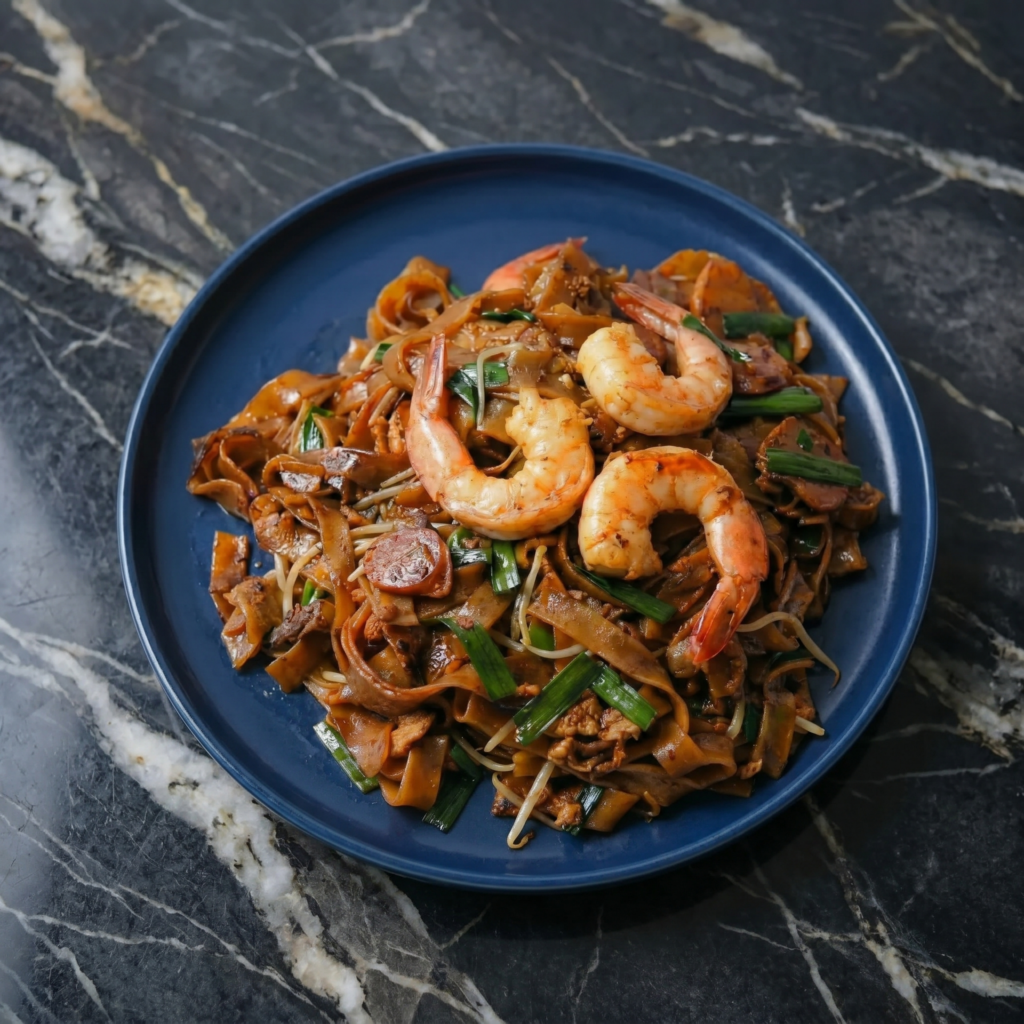
Char Kway Teow (Smoky, Wok-Hei, Malaysian Street Food at Home)
The Masterclass

Char Kway Teow (Smoky, Wok-Hei, Malaysian Street Food at Home)

Experience the bold aesthetics of Culinary Arts.

Get your wok smoking before a single noodle goes in, hotter than feels reasonable, until the surface is hazing. That blistering heat is what gives you wok hei, the smoky char that real char kway teow lives on. Cook the shrimp, sausage, and eggs in batches and pull each one out so nothing steams, then char the noodles hard and pour the dark sauce down the side of the pan so it caramelizes instead of just coating them. Work fast, keep the pan uncrowded, and you'll get there.

The Backstory

Char kway teow comes off the hawker carts of Malaysia and Singapore, where it started as cheap, filling food for laborers and fishermen who needed calories after a long day. The story goes that lap cheong sausage and cockles were the affordable proteins on hand, and the dish built its name on the smoky breath of a screaming-hot wok worked over open flame. Every stall guards its own sauce ratio, which is why no two plates taste quite the same.

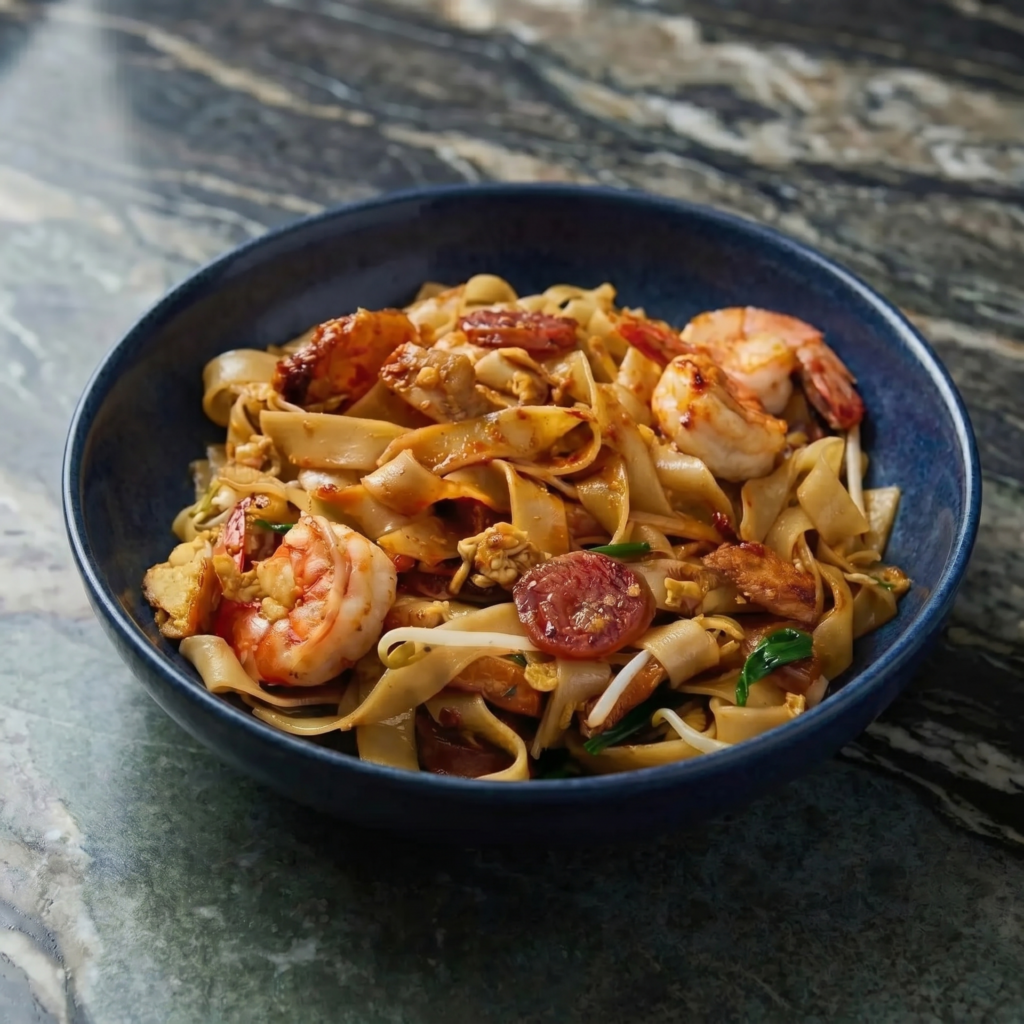
Char kway teow is Malaysian street food royalty. Smoky, wok-charred flat noodles. Shrimp. Chinese sausage. Bean sprouts. Chives. Dark soy sauce. The wok hei (breath of the wok) is the secret. Your cast iron skillet can get close.

Step-by-Step Instructions

1

Prep Noodles

If using dried noodles, soak in hot water until pliable. Drain. If using fresh, gently separate.

2

Make Sauce

Whisk all sauce ingredients in a small bowl.

3

Stir-Fry (High Heat!)

Heat a wok or cast iron skillet over high heat until smoking. Add 1 tbsp oil. Cook shrimp 1-2 minutes per side. Remove.

Add 1 tbsp oil. Cook Chinese sausage until crispy (1 minute). Remove.

Add 1 tbsp oil. Scramble eggs quickly. Remove.

Add remaining oil. Add garlic, then noodles. Toss to char (2-3 minutes).

Push noodles aside. Add sauce and let it caramelize. Toss everything together.

Add shrimp, sausage, eggs, bean sprouts, and chives. Toss for 1 minute.

4

Serve

Serve immediately. That smoky char is the whole point.

Summary

Prep Time: 15 min | Cook Time: 15 min | Total: 30 min

Yield: 4 servings | Difficulty: Hard (requires high heat and quick cooking)

Storage Notes

Best fresh. Char kway teow does not reheat well — noodles become mushy, wok hei disappears. Make only what you’ll eat immediately. Leftovers? Eat cold or toss in a screaming-hot skillet for 1 minute.
Swaps & Substitutions

Questions & Answers

Why did my noodles turn out mushy instead of charred?

Two usual culprits: the wok wasn't hot enough, or you crowded the pan. Get it smoking first, cook the proteins in batches, and stop tossing the noodles constantly. Let them sit against the hot metal for a few seconds so they actually char.

Can I make char kway teow without a wok?

Yes. A heavy cast-iron skillet holds heat well and gives you the screaming-hot surface you need. Heat it longer than you think, and cook in smaller batches since it has less room than a wok.

My fresh rice noodles keep breaking apart. What am I doing wrong?

Cold fresh noodles are brittle and clump. Let them come to room temperature and separate them gently with your fingers before they hit the pan. If they're stuck solid, a few seconds in the microwave loosens them up.

Can I prep this ahead for guests?

Prep everything ahead, but cook at the last minute. Mix the sauce, slice the proteins, and have your noodles separated and ready. The actual stir-fry takes under ten minutes, and char kway teow goes downhill fast once it sits, so serve it straight from the pan.

How do I know the shrimp are done?

They'll curl into a loose C-shape and turn opaque pink, about 1 to 2 minutes per side over high heat. Pull them the moment they look done, since they keep cooking a little when you toss everything together at the end.

Fuel your
stomach.

Curated recipes delivered weekly.